

Introduction
Pixel pitch is one of the most important technical parameters of an LED display. It directly affects image resolution, viewing distance, and overall visual experience. Understanding pixel pitch helps users select the most suitable LED display solution for different applications.

What Is Pixel Pitch?
(Image Position)
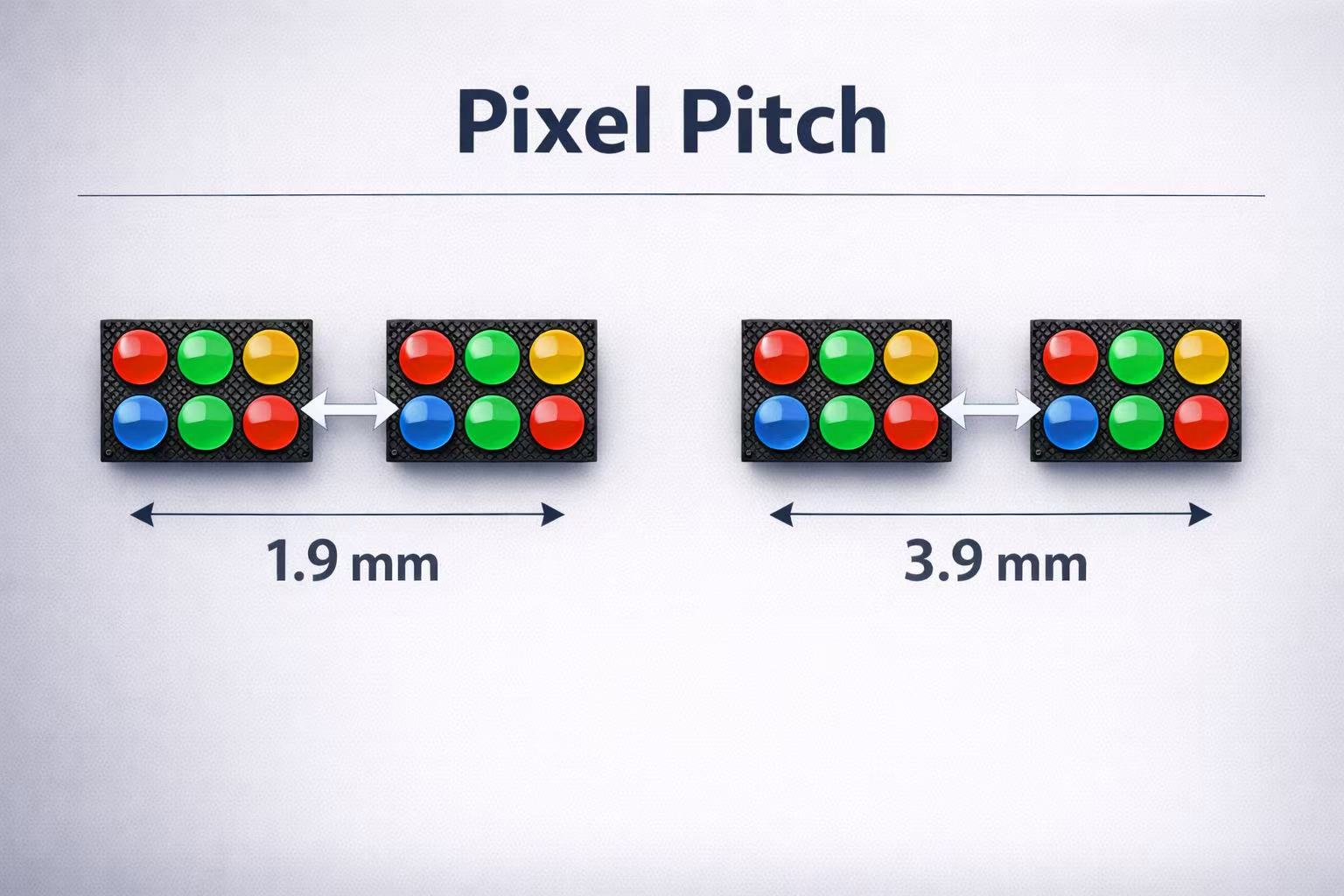
[Insert Image: Diagram illustrating pixel pitch distance]
Pixel pitch refers to the distance, in millimeters, between the centers of two adjacent LED pixels. A smaller pixel pitch means more pixels per square meter, resulting in higher image clarity and finer details.
For example, a P1.9 LED display has a pixel distance of 1.9 mm, offering higher resolution than a P3.9 display of the same size.
Pixel Pitch and Viewing Distance
Pixel pitch is closely related to optimal viewing distance. As a general guideline:
• Fine pixel pitch (P1.2–P2.0) is suitable for close viewing distances
• Medium pixel pitch (P2.6–P3.9) is ideal for rental and commercial applications
• Larger pixel pitch (P4 and above) works well for long-distance outdoor viewing
Choosing the right pixel pitch ensures clear images without unnecessary cost.

Pixel Pitch and Application Scenarios
• Conference rooms and control centers require fine pixel pitch for sharp text and detailed content.
• Rental events and exhibitions often use medium pixel pitch to balance image quality and flexibility.
• Outdoor advertising screens prioritize brightness and durability over ultra-fine resolution.

Conclusion
Pixel pitch plays a critical role in LED display performance and cost efficiency. Selecting the appropriate pixel pitch based on viewing distance and application ensures optimal visual results and long-term value.