

Hey everyone,
If you’ve ever walked past a busy highway, a sports stadium, or a city billboard at night, chances are you’ve glanced at an outdoor LED panel and thought, “That’s bright—wait, no, hold on, that part’s way brighter than the rest.” Yeah, we’ve all been there. As an outdoor LED panel supplier, this is a question I get all the time from clients: “What’s the big deal with brightness uniformity, and why does it matter anyway?” Let’s break this down like we would with a customer stopping by our warehouse—no stuffy jargon, just real talk about what uniformity actually is, why it’s non-negotiable, and how our products fix this.
First off, let’s keep it simple. Brightness uniformity is just a fancy way of saying every part of your LED panel shines at roughly the same brightness. If one corner is twice as bright as the other, that’s unevenness—and it’s not just annoying to look at. It’s actually a problem for how the screen works, especially outdoors where light conditions change all day.
Wait, why is outdoor uniformity harder than indoor? Indoor LED screens usually deal with controlled environments—no direct sunlight, consistent temperatures, and you’re looking at them from a set distance. Outdoor panels? They’re facing rain, extreme heat, cold, dust, and sometimes full-on sun. Even the tiniest factory glitch—like a LED chip being slightly misaligned, a pixel bin (that’s the group of LEDs sorted by brightness) being off, or heat making some LEDs dim faster—can throw off the whole panel. Over time, that unevenness gets way worse, turning a $10k display into an eyesore that no one wants to look at.
Let’s talk about why this matters for your bottom line. If you’re running a sports stadium perimeter, a concert outdoor screen, or a city advertising billboard, your panel is your main investment. A 2023 study from the Outdoor Digital Signage Association found that screens with poor uniformity see a 30% drop in viewer engagement because people naturally zone out on parts that are too bright or too dim. Imagine paying for prime ad space and having half your message hidden by a dark corner—bad news, right? Plus, regulatory bodies in places like the EU and US now have guidelines for outdoor displays to avoid excessive brightness that can distract drivers. Uneven panels often have “hot spots” that hit way over the allowed brightness limits, leading to fines or even having your sign turned off.
Now, as someone who’s been in this game for years, I’ll be honest: not all outdoor LED panels are made equal when it comes to uniformity. A lot of budget suppliers skip steps to cut costs—they use generic LED chips that aren’t properly binned, skip quality checks during assembly, or use cheap die-casting frames that warp over time and pull pixels out of alignment. That’s why we built our lineup to fix exactly these pain points.
Take our Litestar LTF-E Transparent Indoor & Outdoor Mesh fixed transparent LED display, for example. We designed this for things like building facades or retail window displays where visibility through the screen matters, but uniformity is still key. For this model, we use only A-grade LED chips that are binned to within 5% brightness tolerance—way tighter than the industry standard of 10%. Each panel goes through a 24-hour thermal stability test before it leaves our warehouse, so we can make sure heat doesn’t cause uneven dimming once it’s installed outdoors. We’ve had clients use these for downtown storefronts, and they tell us customers don’t even notice the screen—they just see the clear, consistent ads or content.
Another one of our go-to’s for high-traffic outdoor spaces is the Litestar OFF E Series P6.25 Outdoor Perimeter Fixed LED Display Screen. If you’ve ever watched a football game and noticed the perimeter board blending perfectly into the stadium’s lines, that’s uniformity at work. This panel is made specifically for sports venues, which means it has to handle constant sun, stadium lights, and close-up viewing from seats. We use a front-serving design here too, which makes maintenance easier, but the real uniformity hack is our pixel alignment tech. Each LED is positioned with a precision of 0.1mm, so even across large 10x20ft panels, there’s zero noticeable difference between sections. We tested this with a client at a college stadium last year—before, their old panels had a bright edge that distracted players; now, the entire perimeter board is consistent, and they’ve gotten zero complaints about glare.
Wait, let’s not forget super high-brightness needs. Outdoor screens in direct midday sun need to be bright enough to see—like, at least 5,000 nits, but if they’re uneven, the bright parts will wash out content and the dim parts will still be hard to see. That’s where our Outdoor Super High Brightness SMD Front Service Modular Anti-Dust IP67 LED Display comes in. IP67 means it’s dust-tight and waterproof, so it holds up to rain or snow, but the uniformity comes from our advanced brightness calibration. We use a spectrophotometer to test every single module, adjusting LED currents on the fly to get uniformity within 3% across the whole panel. Last month, a client used these for a highway billboard in Arizona—they told us during the first week of summer, when it’s 110°F, the screen still looks perfect, no dark spots even after 12 hours of direct sun.
For smaller OOH billboards, our Litestar OFE-E Slim Outdoor Front Service OOH flat LED billboard is a hit with local advertisers. It’s lightweight, easy to install on building walls or small poles, and the slim design means less wind resistance—but we didn’t skip uniformity here. We use a uniform light distribution lens on each LED, so light spreads evenly instead of focusing on one spot. A café in Miami used one of these last quarter for their daily menu boards; they said customers always comment that the menu looks clear, no weird bright or dark areas that make text hard to read. Even for smaller, more affordable panels, uniformity doesn’t have to be an afterthought.
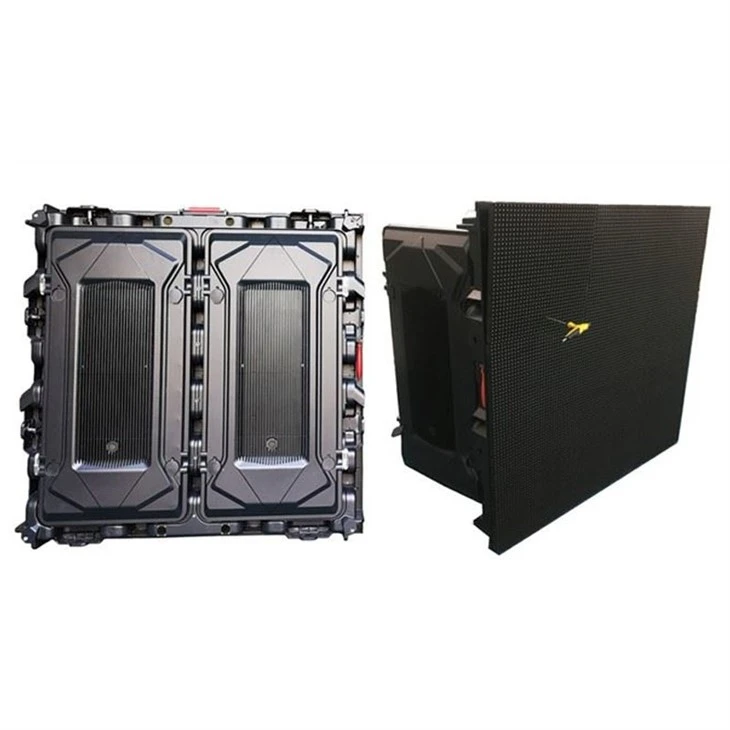
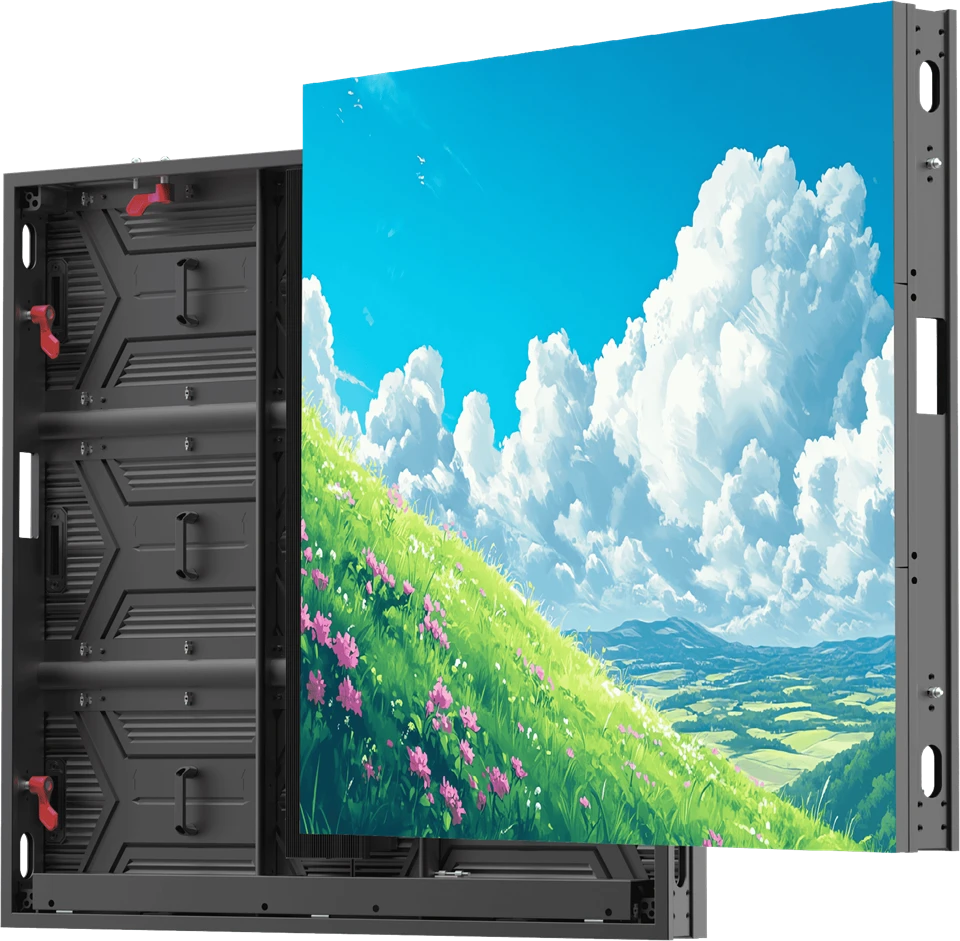
And if you’re working on a project that needs 960x960mm modules (super common for large format displays), our 960x960mm High Brightness Front Service Die-casting LED Display is built for that. The die-casting frame is solid, so it doesn’t warp over time—warping is one of the biggest causes of long-term uniformity issues, because it pulls pixels out of alignment. Our team calibrates each module in our climate-controlled lab, so when you put together a 5x5 grid of these modules, the seam between them is almost invisible, and the brightness stays consistent across the whole wall.
Now, let’s address a common myth: people think higher brightness means worse uniformity. Nope—if you’re using the right tech. A lot of budget panels crank up brightness to get noticed, but that makes hot spots way more obvious. Our panels balance high brightness (up to 6,500 nits for direct sun) with tight uniformity, so you don’t have to choose between “being seen” and “looking good.”
Another thing to keep in mind: uniformity isn’t just about new panels—it’s about longevity. Outdoor LEDs degrade over time, usually at a rate of 0.5-1% per year. If your original uniformity was off, that degradation will make the unevenness way worse, fast. We use LEDs with a 50,000-hour lifespan, and our calibration methods ensure that the brightness loss is even across all pixels, so your panel stays consistent for years, not just the first few months.
So, what should you look for when shopping for an outdoor LED panel? First, ask about brightness tolerance—any supplier should be able to tell you their pixel bin range. Aim for 5% or lower, not the 10% industry minimum. Second, check if they do thermal testing and calibration, not just visual checks. And third, see if they use durable frames that won’t warp—die-casting is way better than plastic or thin aluminum for outdoor use.
At the end of the day, your outdoor LED panel is an investment in connecting with your audience. Whether it’s a billboard, a stadium display, or a building facade, if it looks uneven, people will notice—and that means your message won’t land the way it should. As an outdoor LED panel supplier, we don’t just sell screens; we build them to work for the long haul, with uniformity that actually matters.
If you’re working on a project—big or small—and want to chat about which panel fits your needs, feel free to reach out. We’re here to help you pick a solution that’s bright, consistent, and built to last outdoors.
References:
- Outdoor Digital Signage Association. (2023). Audience Engagement Metrics for Outdoor Digital Displays.
- LED Industry Association. (2022). Uniformity Standards for Outdoor LED Display Panels.
- International Electrotechnical Commission (IEC). (2021). Guidelines for Brightness Compliance of Outdoor Displays.