

If you've ever worked with LED displays, chances are you've heard the term "gamma correction" thrown around, but when it comes to a specific model like a P2.5MM LED display—one of the most popular small-pitch options for indoor use—its gamma correction isn't just a technical detail. It's the difference between a screen that feels like a window into real life and one that looks flat, washed out, or overly harsh. As someone who's spent years supplying and supporting P2.5MM LED displays for events, retail spaces, and corporate setups, I've seen firsthand how getting gamma right makes or breaks a project. Let's break down what the gamma correction function of a P2.5MM LED display actually does, why it matters for this specific screen, and how it ties into the performance you can expect from these versatile units.
First, let's start with the basics. Gamma correction is a mathematical formula that adjusts the brightness values sent to a display to match how the human eye actually perceives light. Here's the thing: our eyes don't see light in a linear way. A light source that produces twice as much energy doesn't look twice as bright to us. Instead, our vision follows a power law relationship, where perceived brightness is proportional to the physical brightness raised to a small exponent—traditionally around 2.2 for standard displays. Without gamma correction, a display would output light in a straight line, making dark scenes too dim and bright scenes overly intense; the contrast would feel unnatural, and fine details in shadows or highlights would be lost.
For a P2.5MM LED display, which has a pixel pitch of 2.5 millimeters—small enough for close viewing distances (usually 1 to 5 meters) and sharp enough for content with high resolution like 1080p or 4K—gamma correction is even more critical than on larger-pitch screens. Because these displays are designed to be viewed up close, every pixel's color and brightness accuracy is noticeable. A bad gamma setting won't just look off; it'll be immediately apparent when you're standing two feet away from the screen, where individual pixels blend together to create a seamless image.
So what exactly is the gamma correction function of a P2.5MM LED display? Unlike a basic linear correction, the function here is calibrated to work with the unique characteristics of LED diodes and the small pixel pitch. Most P2.5MM models use a gamma curve of 2.2, which is the standard for most HDTVs and indoor displays, but high-quality units let you adjust this curve slightly to match specific content types or viewing environments. The function works by taking the input signal (from a media player, laptop, or event controller) and remapping each pixel's digital brightness value (which ranges from 0 to 255 for 8-bit content) to a physical light output that aligns with human vision.
Let's take an example: if a pixel's input is 128, which is halfway on a linear scale, a gamma of 2.2 would adjust that output to around 60% of the maximum brightness, not 50%. This makes dark midtones brighter, so you can see details in a movie's shadowy scene without blowing out the bright parts of a sunrise. For a P2.5MM display, this calibration is done at the factory, but it can also be tweaked on-site by technicians to match the room's lighting. If you're using the screen in a dim conference room, you might lower the gamma slightly to keep dark areas from getting too muddy; in a bright retail space with overhead lights, you can bump it up to make highlights pop without washing out the entire image.
One thing that sets P2.5MM LED displays apart from smaller-pitch options like P1.87mm is how their gamma correction balances image quality and power efficiency. Smaller pixels mean more LEDs per square meter, and each LED uses energy to produce light. The gamma function is optimized to deliver accurate color without wasting power by over-driving LEDs in midtones or shadows. That's why a lot of our clients choose our P2.5MM units for long-term fixed installations—they get the sharp, accurate gamma they need for high-end content, and the energy savings add up over time. If you're looking for a portable option that still delivers that precise gamma for events, you might check out our indoor P2.5mm portable digital LED poster video screen display with wheels for rental and fixed installation, which is designed to hold its calibration even when transported to different venues. The robust mounting and built-in gamma adjustability make it easy to get the right image on site, whether you're setting up for a trade show, a pop-up retail display, or a corporate presentation.
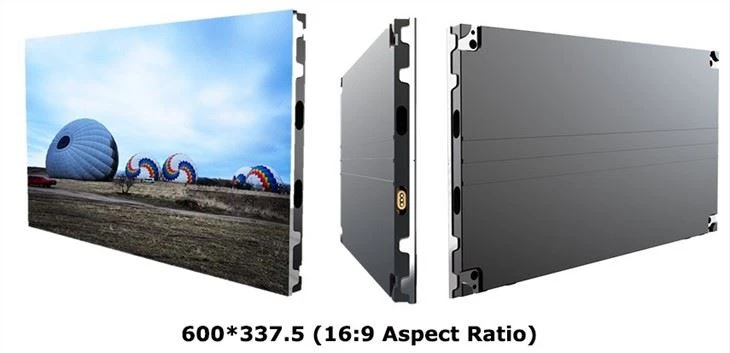
Another key part of the gamma correction function for P2.5MM displays is color accuracy across the entire screen. Because small-pitch displays are often used for video walls or as replacements for traditional monitors, consistent gamma is non-negotiable. If one section of the screen has a slightly different gamma than another, you'll see a noticeable banding effect that breaks up the image. Our LSP Series ultra thin 600*337.5mm small pixel pitch 16:9 low cost front service LED video wall for 2K/4K/8K LED TV units use uniform gamma calibration across all panels, so when you put them together, the entire wall looks like a single, seamless screen. The front service design also makes it easy to adjust gamma on individual panels if needed, without taking the entire wall down— a huge plus for maintenance teams.
Wait, you might be wondering how gamma correction works with higher resolutions. P2.5MM displays pair perfectly with 2K and 4K content, which is becoming more common for corporate presentations and streaming. The gamma function is designed to work with 10-bit or 12-bit input signals, which have more brightness levels, so you don't get banding or blocky shadows. For example, our fine pixel pitch LED video wall with 16:9 aspect ratio models—even when paired with 4K content—maintain smooth gradients because the gamma curve is calibrated to handle the extra detail. This is important for things like video production, where subtle color shifts or lighting effects rely on accurate brightness reproduction.
Let's talk about common misconceptions. Some people think gamma correction is just a "set it and forget it" setting, but for a P2.5MM LED display, it's a dynamic tool. If you're using the screen for live events, where lighting can change throughout the day—morning vs. afternoon, indoor vs. outdoor-adjacent spaces—adjusting gamma can make the image look consistent. We've had clients use our 610x343mm narrow pixel pitch series for conference rooms that need to display both presentations and live video feeds; being able to tweak the gamma means text stays crisp and white without looking blue, and video content stays vibrant and accurate at the same time.
Another point: gamma correction also affects the perceived color temperature of the screen. LEDs have different color temperatures depending on their binning, and the gamma function works alongside the color processing to ensure that whites look neutral, not warm or cool, across the entire screen. That's crucial for applications like digital signage, where accurate color can make or break a brand's message. A retail store using a P2.5MM display to show product photos won't want a red shirt to look pink just because the gamma is off. Our P1.87mm 4K LED TV/ ultra HD LED video wall with 16:9 aspect ratio for conferences models have advanced gamma processing that's even more precise, perfect for when you need studio-level color accuracy, but our standard P2.5MM units are calibrated to meet the needs of most applications without the premium price tag.
So, how does all this affect you as someone looking to invest in a P2.5MM LED display? The gamma correction function isn't just a technical specification—it's what makes your content look the way it was intended. Whether you're displaying corporate videos, advertising, or live events, a well-calibrated gamma means your audience will see rich details, natural colors, and consistent brightness from edge to edge. When you're choosing a supplier, it's important to look for models that have factory-calibrated gamma options, and the ability to adjust gamma on-site to fit your specific space.

At the end of the day, a P2.5MM LED display's gamma correction is about bridging the gap between digital content and human vision. It's not just about numbers or curves—it's about making sure when you watch a movie, a presentation, or a marketing video on that screen, it looks lifelike, not artificial. If you're in the market for a P2.5MM LED display for rental, fixed installation, or portable use, we have a range of options designed to deliver the right gamma performance for every scenario.
If you have questions about how our P2.5MM displays can work for your specific project, or want to learn more about their gamma correction functions, we'd love to help. Reach out to our team to discuss your needs and find the perfect LED display solution for your next project.
References
- International Electrotechnical Commission. (2010). IEC 62087: Audio, video and related equipment - Methods for measuring power consumption.
- Bush, J. (2007). Digital Video Essentials: HD Basics. O'Reilly Media.
- LEDinside. (2022). Global Small Pixel Pitch LED Display Market Report, 2022-2026.
- Poynton, C. A. (2012). Digital Video and HD: Algorithms and Interfaces. Morgan Kaufmann.
- Society of Motion Picture and Television Engineers. (2011). SMPTE RP 177-1: Determination of Adult Nominal Viewing Distance for High Definition Television Systems.