

If you’ve ever stood in front of a 4K LED video wall at a trade show, retail store, or even a corporate boardroom, you might have found yourself squinting a little—whether because the screen was too dim or, more likely, way too bright. But brightness isn’t just a matter of personal preference; it’s make or break for how well your content looks, how comfortable viewers are, and even whether the wall can stand up to its intended space. As a 4K LED video wall supplier, I get asked this question all the time: “What’s the right brightness for a 4K LED video wall?” The short answer? It depends, but let’s break down the science, the mistakes people make, and how to get it just right.
First, let’s get clear on what “brightness” actually means here. A lot of folks mix up brightness with resolution, but they’re totally separate. Resolution (like 4K) is how many pixels are packed into the screen—for video walls, that’s usually 3840x2160 pixels, matching UHD TV specs. Brightness, though, is measured in nits (cd/m²), which is the amount of visible light emitted by the screen. Think of it like a lightbulb: a 100W bulb is brighter than a 40W one, just as a 1,000-nit LED wall is brighter than a 500-nit one. But here’s the catch: there’s no one-size-fits-all nit count for 4K walls. It all comes down to where you’re putting it.
Indoor spaces are usually the first stop for 4K LED walls, and not all indoor areas are the same. A quiet corporate conference room with blackout curtains needs way less brightness than a busy retail storefront with big windows and sunlight streaming in. Let’s do the math here: in a dimly lit office, people are sitting 6 to 10 feet away from the wall, and ambient light is low. A brightness of 300 to 500 nits works perfectly—any brighter, and you’ll get glare off the screen, eye strain, and even washed-out colors. But crank that same wall up to 500 nits in a store with floor-to-ceiling glass and you’ll be squinting to see anything, because the sun’s 10 times brighter than that (around 5,000 to 10,000 nits at noon). For high-traffic retail, outdoor-facing digital signage, or spaces with lots of natural light, you need 1,000 to 1,500 nits minimum, and sometimes even 2,000 nits for direct sun exposure.
Wait, but what about small pixel pitch 4K walls? Pixel pitch is the distance between each LED pixel, so smaller pitch (like P1.2, P1.5) means sharper images up close—perfect for boardrooms or control rooms where people are sitting near the wall. A common mistake here is thinking smaller pitch = higher brightness, but that’s not true. In fact, some fine-pitch 4K walls are built for indoor use where ambient light is controlled, so their brightness might be 500 to 800 nits, which is ideal for close viewing. If you tried to run a 2,000-nit fine-pitch wall in a small conference room, you’d end up with a screen that’s too harsh—like staring into a flashlight for hours. That’s why picking the right brightness paired with your wall’s use case is way more important than just chasing high nit numbers.
I’ve seen this play out first-hand with clients who come to us wanting the “brightest wall possible” because they think it’s better. For example, a recent client ran a 2,000-nit wall in their 10x12 foot boardroom, and their team complained of headaches after 20 minutes of meetings. We swapped it out for a lower-brightness model from our LSP Series Ultra Thin 600*337.5mm Small Pixel Pitch 16:9 Low Cost Front Service LED Video Wall For 2K/4K/8K LED TV, and suddenly everyone was happy—colors popped, no glare, and the 4K resolution looked crisp even from 8 feet away. That’s the thing: brightness has to match your space, not your ego for a big number.
Another factor viewers often overlook is viewing distance. The closer you are to a 4K wall, the less brightness you need, because your eyes are already focused on the pixels. If you’re sitting 3 feet away from a fine-pitch 4K wall (common in control rooms or gaming setups), 300 to 500 nits is enough. But if you’re 20 feet away at a trade show booth, you need that extra brightness to cut through the ambient noise from other displays and make your content stand out. It’s like how a phone screen is bright enough for your hand, but a movie theater projector is way dimmer because you’re sitting far away.
Color accuracy also ties into brightness, which is a big deal for 4K content. A wall with too high brightness can wash out deep blacks and make reds or greens look faded. For creative uses—like art displays, marketing videos, or design presentations—you need brightness that lets your colors stay true. Our 480x480mm Narrow Pixel Pitch Series, for example, is calibrated to deliver consistent 800 nits with a 120% NTSC color gamut, so designers don’t have to compromise on their work to get visibility. That’s a better balance than cranking nits just to be loud.
What about COB fine-pitch walls? These are the ones with chips on board LEDs, which are more durable and have better color uniformity than traditional SMD. Our Litestar LCP PRO Indoor Fine Pitch COB LED Display Screen Panel is a great example, with a brightness range of 400 to 1,200 nits—so you can adjust it to your space without buying a whole new wall. That flexibility is key for businesses that might move their wall from a conference room to a lobby, or between different events. You don’t want to be stuck with a wall that’s too bright for one space and too dim for another.
Now, let’s talk about common myths. One big one is that all 4K LED walls are equally bright. No way—you can find budget 4K walls under 500 nits and premium ones over 2,000 nits, depending on the LED chips, panel design, and purpose. Another myth is that higher brightness means better image quality. I’ve tested walls where a 1,000-nit wall had way better color and detail than a 2,500-nit wall in a dim space, because the 2,500-nit one had washed-out whites and strained eyes. It’s all about balance.

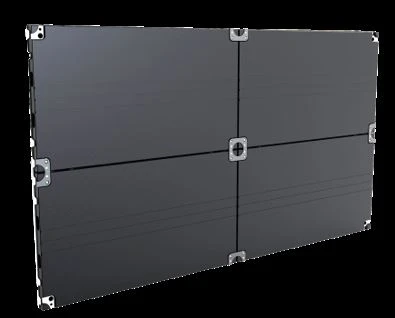
If you’re shopping for a 4K LED video wall, here’s what to ask yourself to narrow down the right brightness: Where is it going? Is it in a dark boardroom, a sunlit store, or a trade show floor? How far will your viewers sit? Will you use it for videos, presentations, or digital signage? If you’re not sure, we’ve got solutions built for every scenario. For example, our Fine Pixel Pitch LED Video Wall With 16:9 Aspect Ratio is available in brightness levels from 350 nits up to 1,800 nits, so we can match it to your space without overcharging you for features you don’t need.
Front maintenance is another thing that ties into brightness and usability. No one wants to take a whole wall down to fix a broken panel, so our P1.25/P1.56/P1.875/P2.5 Front Maintenance/front Service 16:9 Fine Pitch LED Display For 4K/UHD Digital Signage Video Wall lets you swap out panels in minutes without shutting down the whole system. That means if a panel’s brightness dips over time (which happens with all LED displays, just like phone screens fade a little), you can fix it quickly without downtime.
At the end of the day, the brightness of a 4K LED video wall isn’t a number to brag about—it’s a tool to make your content look great and keep viewers comfortable. As someone who’s installed hundreds of these walls, I can tell you that the best ones are the ones that fit your specific space, not the one with the highest nit count. Whether you’re outfitting a small boardroom or a big retail space, we’ve got the 4K walls, from thin, affordable models to premium fine-pitch options, that will hit the brightness sweet spot for you. If you’re not sure where to start, reach out to our team—we’ll walk through your space, your content, and your needs to find the perfect wall for you.
References
- Society of Motion Picture and Television Engineers. (2020). “Recommended Practice for High Dynamic Range (HDR) Studio Television Production.”
- Display Daily. (2022). “Indoor LED Brightness Guidelines for Commercial Spaces.”
- LED Professional Association. (2021). “Fine-Pitch LED Display Performance Standards.”
- Digital Signage Today. (2023). “Choosing LED Brightness Based on Viewing Distance and Ambient Light.”